

Question Constraints
Question Constraints allow organization admins to define compliance rules that screening questions must follow for their organization. These rules help ensure that questions configured by recruiters follow internal policies and any applicable regulations, while still giving teams flexibility in how they design interviews.Default Question Constraint
Your organization comes with an empty Default Question Constraint which automatically applies to all jobs. This default constraint is typically used to enforce your global compliance standards, such as:- Which topics questions may or may not cover
- How questions about sensitive attributes should be handled
- Any requirements for phrasing or grading instructions
Adding Additional Question Constraints via the Rules Engine
In addition to the default constraint, admins can configure additional Question Constraints and apply them to specific sets of jobs via the Rules Engine. Common examples include:- Creating region-specific constraints for certain states or countries
- Applying stricter rules for roles with additional regulatory requirements
- Use Conditions (for example: job location, department, seniority)
- Add Actions that attach one or more Question Constraints to matching jobs
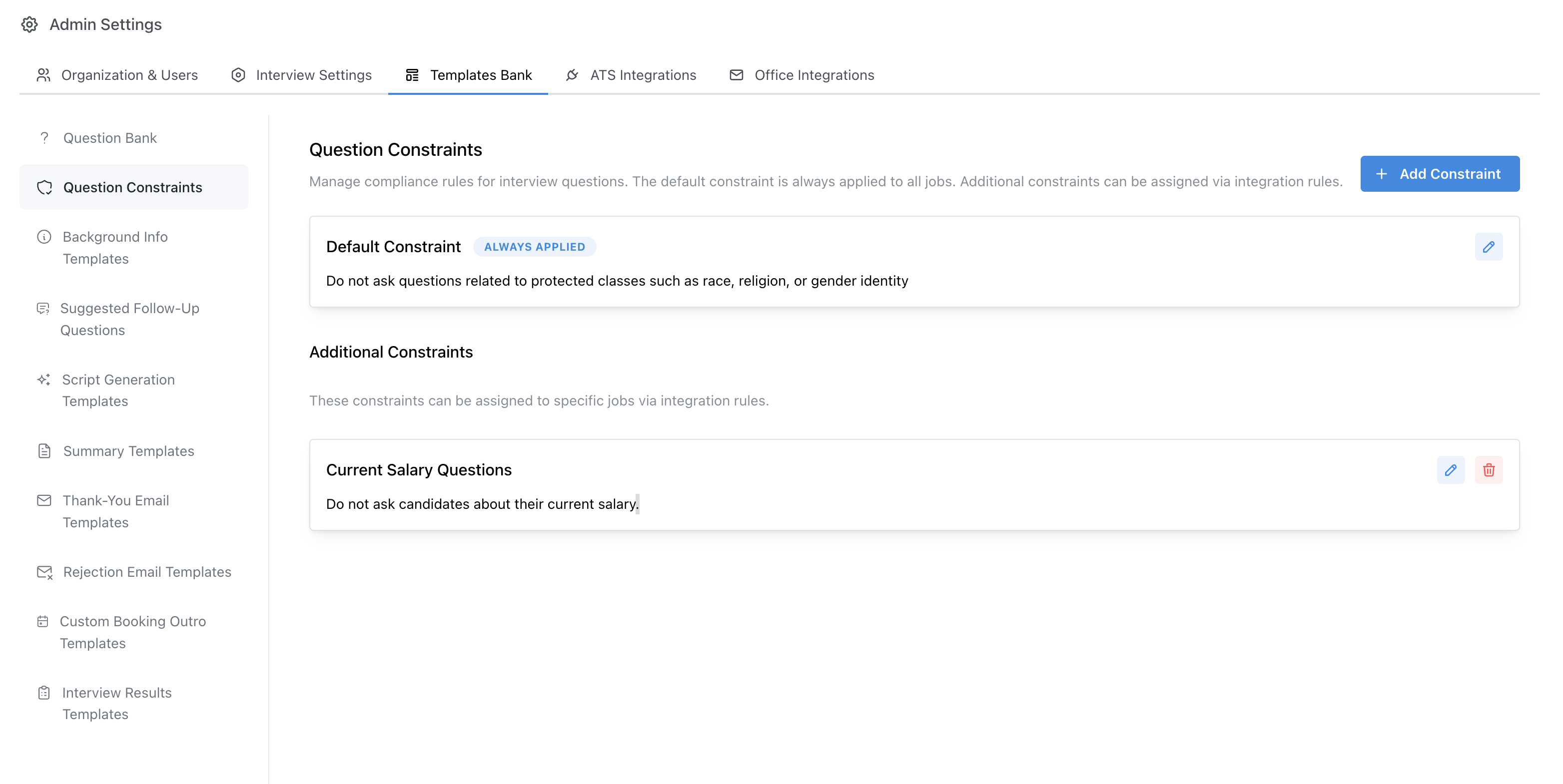
Admin > Templates Bank > Question Constraints
Constraint Violations
When a recruiter creates or edits a question, Tenzo will check it against the active Question Constraints for that job.- Questions that violate one or more constraints will be flagged in the job editor UI.
- Flagged questions can still be added to a job, but only with explicit admin approval.
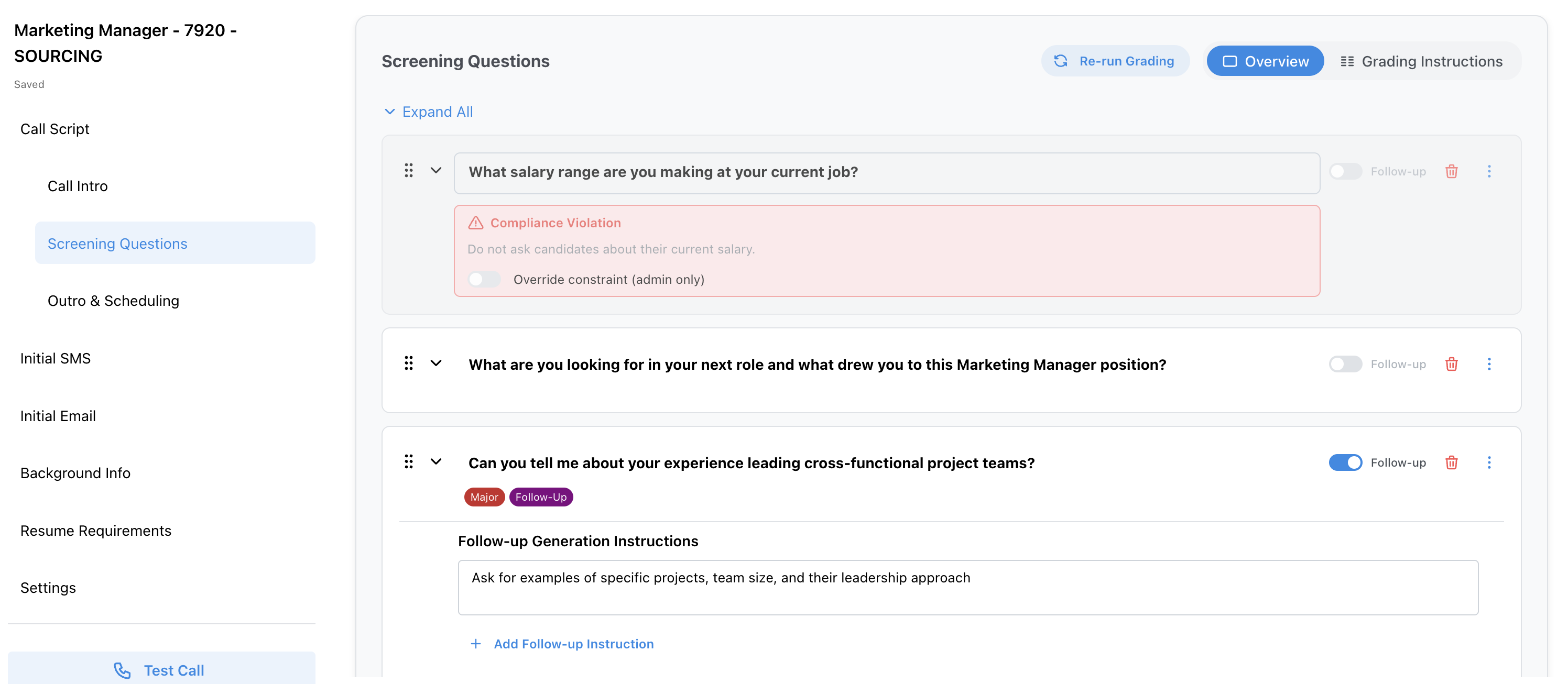
Job > Configure > Screening Questions > Question Constraint Violation
- Compliance and risk management (via clear constraints and flags)
- Recruiter flexibility (allowing exceptions with the proper approvals) []