

SSO Connections
Organization admins can configure Single Sign-On (SSO) from the Admin section of the Tenzo app.- Navigate to Admin > Organization & Users > SSO Settings.
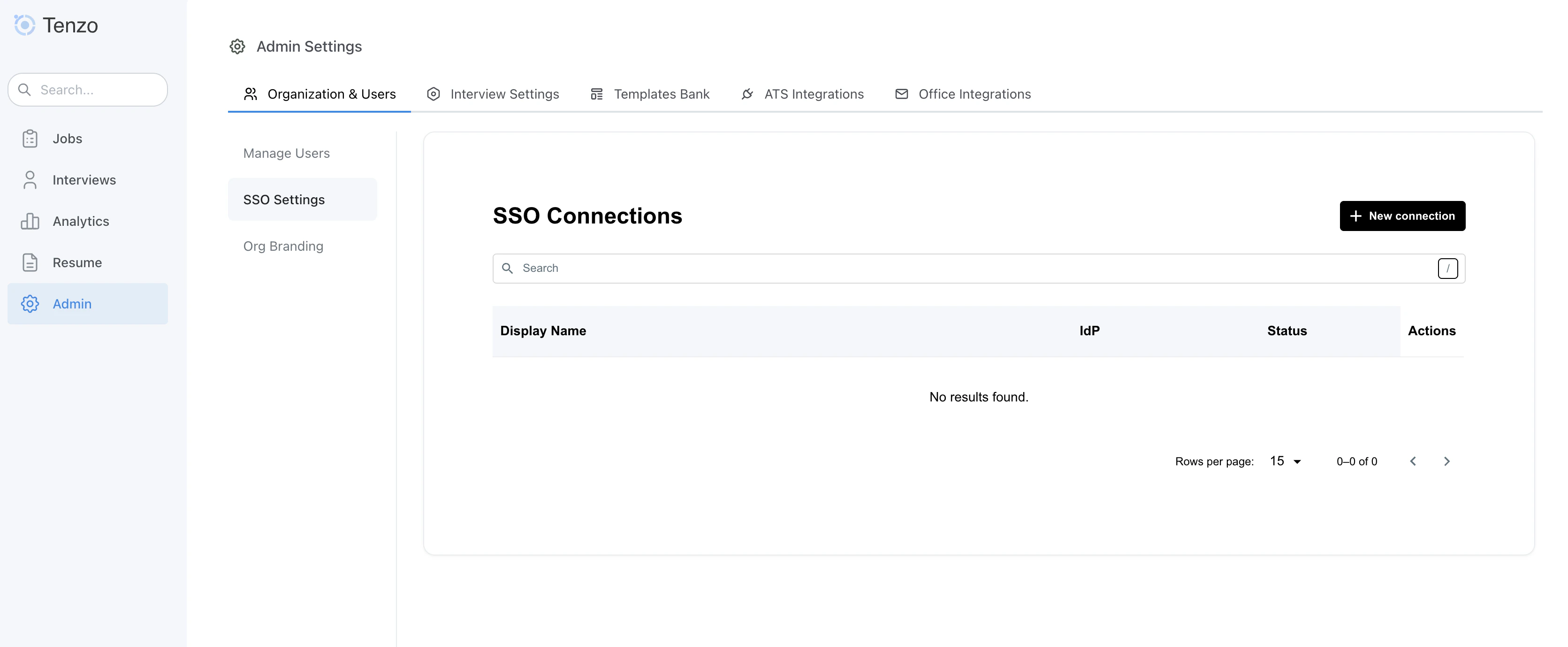
Admin > Organization & Users > SSO Settings
Creating a New SSO Connection
To add a new SSO connection:- Go to Admin > Organization & Users > SSO Settings.
- Click New connection.
- Enter a Display Name that will help admins recognize the connection (for example, “Okta - Production”).
- Follow the guided setup flow on the SSO configuration page. The UI will walk you through copying any values needed into your identity provider and pasting the provider details back into Tenzo.
- Save the connection once the setup flow indicates that configuration is complete.
Testing and Enabling SSO
After creating a connection, use a test account from your identity provider to sign in via the SSO option on the Tenzo login page and confirm that you can successfully access your workspace. Once verified, users in your organization will enter their email on the Tenzo login page and be routed into SSO automatically, unless an admin has allowed that person to use email and password.Organizations With Multiple SSO Connections
Some organizations configure more than one active SSO connection — for example, separate identity providers for different business units or subsidiaries under the same Tenzo organization.- If your organization has exactly one active SSO connection, users enter their email and see a Continue with SSO button that sends them directly to that identity provider.
- If your organization has more than one active SSO connection, users instead see a connection picker as soon as they enter their email — before any “Continue with SSO” button appears. The picker lists each active connection by its Display Name and IdP; the user selects the correct one for their team, then clicks Continue with SSO to proceed to that identity provider.
Managing Existing Connections
From the SSO Settings page you can:- Search for a specific SSO connection by display name.
- View the associated IdP and status.
- Use the actions menu to update or disable a connection when needed.